

In recent years, the use of artificial intelligence (AI) technologies in medicine has increased rapidly. The field of eye diseases, known as ophthalmology, is one of the medical disciplines that has benefited the most from these developments. One important reason for this is the extensive use of imaging methods in the diagnosis and follow-up of eye diseases. Data such as retinal photographs, optical coherence tomography (OCT) images, and visual field tests provide rich sources of information that artificial intelligence systems can analyze. The aim of this article is to explain, in an understandable way, how artificial intelligence is used in the diagnosis and treatment of eye diseases and what it means for patients.
What Is Artificial Intelligence?
Artificial intelligence is a general term for technologies that enable computers to perform certain tasks in a human-like manner. AI systems used in medicine range from simple diagnostic evaluations to complex structures such as machine learning and deep learning. These systems are trained on large amounts of medical data and images, allowing them to learn how to recognize signs of specific diseases. As a result, they can make diagnoses with high accuracy and determine the stage of a disease. In later stages, they can also assist in treatment planning by using evidence-based medical knowledge.
For example, an artificial intelligence system trained with thousands of retinal photographs can detect signs of diabetes-related eye disease in a newly taken retinal image. It can make a diagnosis and suggest treatment options. In this process, the computer analyzes very subtle changes in the images to reach its conclusions.
Where Is Artificial Intelligence Used in Ophthalmology?
One of the most important applications of artificial intelligence in ophthalmology is the screening and early diagnosis of retinal diseases.
Diabetic Retinopathy:
This condition, seen in patients with diabetes, is one of the leading causes of preventable blindness worldwide. Artificial intelligence systems can analyze retinal photographs and detect signs of diabetic retinopathy at an early stage. This allows patients to be referred for treatment before vision loss develops.
Age-Related Macular Degeneration:
This disease, which can occur with aging, may affect central vision. AI-assisted analyses can detect very small changes in OCT images, helping with early diagnosis and monitoring of treatment.
Glaucoma:
Glaucoma is a disease that causes damage to the optic nerve and often progresses silently. Artificial intelligence systems can help assess glaucoma risk by analyzing visual field tests and images of the retinal nerve fiber layer.
Screening Programs:
In some countries, artificial intelligence systems are used for screening purposes, especially in regions where access to ophthalmologists is limited. Retinal photographs can be taken and evaluated initially by AI, and high-risk patients can then be referred to an eye specialist.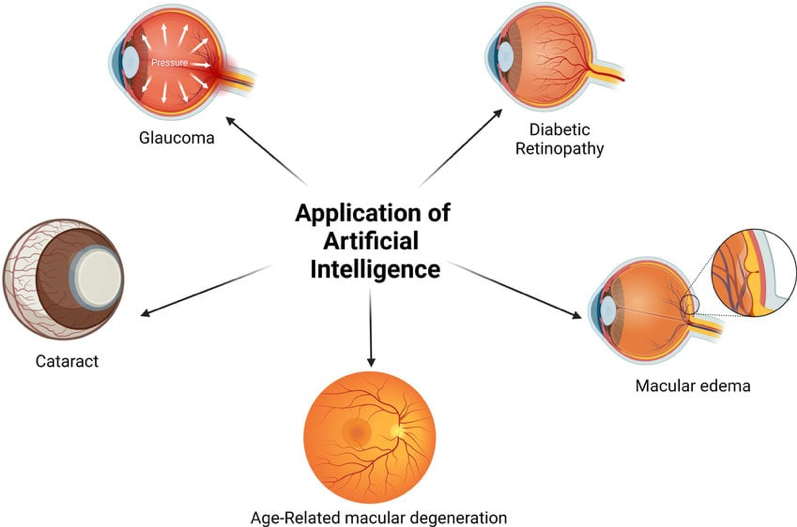
Can Artificial Intelligence Replace Doctors?
One of the most frequently asked questions on this topic is whether artificial intelligence will replace doctors. The systems used today are not designed to replace physicians but to assist them.
An AI system can analyze images very quickly and detect certain findings. However, the final evaluation including the patient’s overall health condition, symptoms, examination findings, and treatment options is always made by a physician.
In other words, artificial intelligence is a support tool; the responsibility for medical decisions and the final evaluation always belongs to the doctor.
Advantages of Artificial Intelligence for Patients
When used appropriately, artificial intelligence can provide important advantages for patients:
These developments can contribute to preventing vision loss, particularly in conditions such as diabetic retinopathy and macular diseases.
Limitations of Artificial Intelligence
Like any technology, artificial intelligence also has certain limitations.
AI systems can only be as successful as the data they are trained on. If the training data are not sufficiently diverse, the system may not perform equally well across different patient groups. In addition, the accuracy of these systems may decrease when image quality is poor or when rare diseases are involved.
For this reason, AI results should always be interpreted together with clinical evaluation.
What Does the Future Hold?
Artificial intelligence technologies continue to develop rapidly. In the coming years, these systems are expected to become more accurate, more reliable, and more widely used. The role of AI in the early diagnosis of eye diseases, treatment planning, and disease monitoring will likely continue to grow.
However, the most important point is this: artificial intelligence in medicine is not intended to replace human physicians, but to support their decisions and make healthcare services more effective.
Conclusion
Artificial intelligence is becoming an important supportive tool in ophthalmology. It can make significant contributions in areas such as the analysis of retinal images, early diagnosis of diseases, and patient follow-up. Nevertheless, the evaluation of patients and treatment decisions always remain the responsibility of the ophthalmologist.
Therefore, artificial intelligence is a technology that complements human expertise and aims to improve the quality of healthcare. When used properly, it has the potential to provide significant benefits for both doctors and patients.
